BC Registration Paperwork Checklist
Getting your off-road vehicle (ORV) registered in British Columbia can feel like navigating a maze, especially when you're trying to figure out exactly which documents you need to bring to the Autoplan broker. Many riders get frustrated when they show up, excited to get their quad or side-by-side legal, only to be turned away because a crucial piece of paper is missing. This guide is here to untangle that confusion, providing a comprehensive, step-by-step checklist of all the paperwork you'll need to successfully register your ATV or UTV in BC, saving you time, stress, and multiple trips.
Understanding the Basics of BC ORV Registration
Before we dive into the nitty-gritty of the paperwork, it’s really helpful to understand why BC's ORV registration process is the way it is. It's often different from registering a car or truck, and that's where a lot of the initial confusion stems from for folks new to the ORV world, or even seasoned riders who are just now getting around to registering their machines.
Why Paperwork Matters So Much in BC
One of the biggest head-scratchers for many new ORV owners in BC is the concept of a "title." Or rather, the lack thereof! Unlike cars, BC doesn't issue a traditional ownership title for ATVs and UTVs. This can be a real point of anxiety for riders who are used to having that single, definitive document proving their ownership. Instead, what you receive is a [BC's Certificate of Registration Explained], which serves as your proof of lawful possession and the machine's registration status. This certificate is crucial, and it relies entirely on a clear, unbroken chain of previous ownership documentation.
Because there's no central "title" document that gets transferred and recorded like a highway vehicle, the entire history of the machine's ownership—from its original sale or import all the way up to you—must be verifiable. This is where the paperwork really steps in. If any link in that chain is weak or missing, the whole process grinds to a halt. It's not about being difficult; it's about ensuring that the machine you're registering genuinely belongs to you and hasn't been stolen or has any other encumbrances on its history. This is a common pitfall for riders, especially when dealing with older machines or private sales where previous owners might have been a bit casual with their records. You might be asking, [Why BC Does Not Title an ATV]? Well, it comes down to the legislation.
What Happens at an Autoplan Broker
So, you've got your machine, and you're ready to get it registered. Where do you go? Unlike some jurisdictions where you might visit a government service centre, in BC, ORV registration happens through an authorized [BC Autoplan Brokers Handle ORV Registration]. These are the same friendly folks who help you with your car insurance and driver's licensing needs.
The broker's role is absolutely critical. They act as the intermediary, verifying all your documents, ensuring they meet the provincial requirements, and then submitting your application to the provincial registry. They'll confirm your identity, scrutinize your proof of ownership, calculate any applicable taxes, and ultimately process your registration. Think of them as the gatekeepers of the registration process. They're trained to spot discrepancies and ensure everything is above board. This means being prepared when you walk through their door is key – they can't make exceptions if your paperwork isn't quite right. They are your first and often only point of contact for getting your machine legally registered for use on Crown land and designated trails.
The Core Documents Every Rider Needs
Alright, let's get down to brass tacks. These are the non-negotiable items, the absolute must-haves that every rider needs to present when registering their ATV or UTV in BC. Skipping any of these will almost certainly send you home empty-handed.
Proof of Ownership: The Bill of Sale
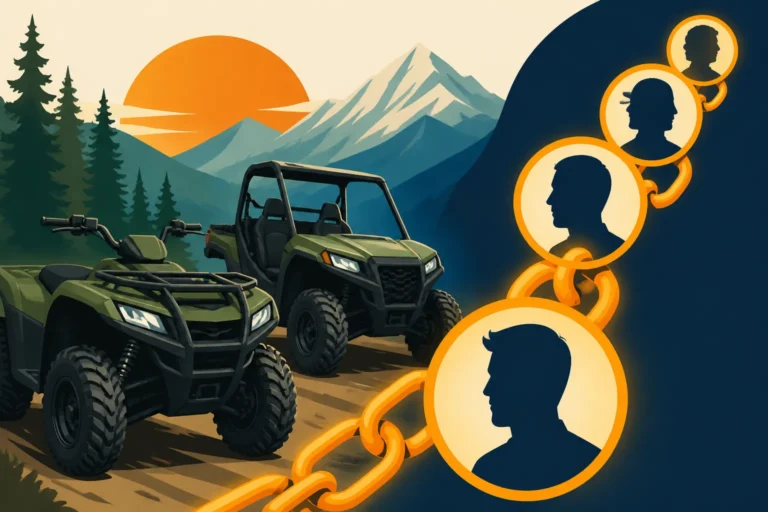
This is arguably the single most important document you'll need. Every single time an ORV changes hands in BC, there needs to be a clear, verifiable bill of sale. And when we say "every prior owner," we really mean it. The broker isn't just interested in the bill of sale from the person you bought the machine from; they want to see the entire chain of ownership, right back to its original retail sale or import into BC. This is where many riders get stumped, especially with older machines that have changed hands many times.
A good bill of sale isn't just a scribble on a napkin. It needs to contain specific information to be valid and useful. This includes:
- The full legal names and addresses of both the buyer and the seller.
- The date of the sale.
- The agreed-upon purchase price (this is crucial for calculating PST!).
- A detailed description of the machine, including its make, model, year, and most importantly, its Vehicle Identification Number (VIN).
- Signatures of both the buyer and the seller.
Without this, the broker has no way to legally confirm that you actually own the machine or that the previous owner had the right to sell it to you. Imagine you bought a used quad from a friend, who bought it from their cousin, who got it from an online marketplace years ago. If you only have the bill of sale from your friend, you're missing two crucial links in that chain. The broker will send you away until you can produce the documentation for those missing transfers. This is precisely why [BC Bills of Sale for Every Prior Owner] is such a critical component of the registration process. It might seem like overkill, but it's how the system ensures proper ownership. The mantra here really is: [Why Every Past Sale Has to Be Documented].
If you're making a private purchase, or even selling your own machine, using a professional bill of sale template can save you a lot of headaches later. Resources like LawDepot offer customizable bill of sale templates that cover all the necessary legal ground, ensuring you don't miss any critical details that could jeopardize a future registration or transfer.
Your Personal Identification
This one seems obvious, but it's often overlooked in the flurry of getting the machine's paperwork in order. When you go to register your ORV, you'll need to bring valid, government-issued photo identification. This is how the Autoplan broker verifies that you are, in fact, the person applying for the registration and that you legally exist.
Acceptable forms of ID typically include:
- A valid BC Driver's Licence.
- A BC Services Card (with photo).
- A Canadian passport.
- Other government-issued photo ID.
The broker needs to confirm your identity to link the registration to you. They'll also typically need proof of your current BC address if it's not on your primary ID, so a recent utility bill or another official document showing your name and address is a good idea to bring along. Remember, [BC Riders Must Carry Photo ID] when out on the trails, so it's not just for registration day, it's an ongoing requirement!
Navigating Missing or Imperfect Paperwork
This is where things can get a bit tricky, and it's the reason many riders find themselves making multiple trips to the broker. It's incredibly common for older machines, or those purchased through casual private sales, to have missing documentation. But don't despair! BC has a mechanism to address these situations, though it requires a bit more effort on your part.
The Statutory Declaration: Your Lifeline for Missing Bills of Sale
Let's say you've got an amazing quad, but the person you bought it from didn't have a bill of sale from their predecessor. Or perhaps you inherited a machine from a family member who has since passed away, and there's no formal transfer document. This is precisely where a Statutory Declaration comes into play.
A Statutory Declaration is a formal, legal document where you solemnly declare, under oath or affirmation, a set of facts. In the context of ORV registration, it's used to attest to ownership or to explain gaps in the ownership chain when a traditional bill of sale is unavailable. For example, you might declare that you've owned the machine since a certain date, that you purchased it for a specific amount, and that you have no knowledge of any other claims to its ownership. You might also use it to declare how you acquired the machine (e.g., inherited it, received it as a gift, found it abandoned and lawfully claimed it after a certain period).
To be valid, a Statutory Declaration must be signed in front of a Commissioner for Oaths or a Notary Public. These individuals will verify your identity and witness your signature, making the document legally binding. It's a serious document, and making false statements can have legal consequences. So, ensure every detail you declare is truthful and accurate.
While it adds an extra step and a small fee (typically [BC Statutory Declarations Cost $15] per declaration), it’s often the only way to bridge those documentation gaps. Many riders find drafting these declarations daunting, but services like LawDepot provide templates specifically for various legal declarations, which can be immensely helpful in ensuring you cover all the necessary points. Using a well-structured template can make sure your declaration is accepted by the broker. [When a Declaration Replaces a Missing Bill of Sale], it needs to be comprehensive and clear.
Dealing with Gaps in the Ownership Chain
We touched on this earlier, but it deserves a deeper dive because it's such a common source of frustration. The BC registration system requires a continuous, unbroken line of ownership from the point the ORV entered the province (or was first registered if it was manufactured here) all the way to you. If there's any transfer missing in that sequence, the broker cannot complete your registration.
Imagine this scenario: you just bought a vintage dirt bike from an enthusiast you met at a swap meet. You've got a perfectly good bill of sale from them. However, when you go to the broker, they ask for the bill of sale from when that enthusiast bought it, and then the one before that, and so on. Your seller tells you they bought it twenty years ago with just a handwritten receipt, and the person before them is long gone. Now you're stuck. This is a classic example of [BC Ownership Chains Going Back Decades] causing a headache.
For every missing link in that chain, you'll need a Statutory Declaration. This means if your seller bought it from someone with no paperwork, your seller might need to provide a Statutory Declaration detailing their acquisition. Then, you'd have your bill of sale from them. If that previous owner also had a gap, you'd theoretically need a declaration from them too, which is impossible if they're unreachable. This is where it can get really complicated.
Sometimes, if the chain is truly broken and previous owners are untraceable, you, as the current possessor, might need to make a declaration about how you came to possess the machine, acknowledging the gap and swearing that you are the rightful owner to the best of your knowledge. The broker will guide you on the best approach, but be prepared for the possibility that you might need multiple declarations for [Registering a Quad With a Gap in Its Ownership Chain]. It's a testament to the system's rigour in establishing clear ownership, even when history is murky.
Machine Specific Information and Other Considerations
Beyond the personal and ownership documents, there's specific information about your ATV or UTV that the broker needs. This helps to uniquely identify your machine and ensure it complies with registration requirements.
Vehicle Identification Number (VIN) Verification
The Vehicle Identification Number (VIN) is your machine's unique fingerprint. It's a 17-character code (for machines manufactured after 1980) that identifies the manufacturer, make, model, year, and serial number of your ORV. It's absolutely essential for registration.
When you visit the Autoplan broker, they will need to verify this VIN. This typically means you'll either need to bring your machine in so they can physically inspect the VIN, or, more commonly, provide clear, legible photographs of the VIN plate or stamping on the machine itself. Ensure the VIN is clean and easily readable in the photos – blurry or obstructed images won't cut it.
Knowing [Serial Numbers and Where They Hide] on your specific type of ORV is a big advantage. On ATVs, the VIN is often stamped on the frame near the front wheel, under the seat, or on the lower frame rail. On UTVs, it can be on the frame, in the engine compartment, or on a compliance sticker. Double-check your owner's manual if you're unsure. This verification is critical for official identification and to prevent registration of stolen vehicles.
Proof of Purchase Price and PST
When you register your ORV, you will also pay Provincial Sales Tax (PST) on the purchase price. This is why the purchase price needs to be clearly stated on your bill of sale. If you're using a Statutory Declaration in lieu of a bill of sale, it also needs to include the declared value of the machine.
The PST is typically calculated on the greater of the purchase price or the wholesale value of the machine. The broker will have access to valuation guides for common models, so if your declared purchase price seems unusually low, they might use the wholesale value for PST calculation. Be prepared for this. This is an important part of the financial transaction and the overall cost of getting your machine on the trails. You can learn more about [BC PST on an ATV Purchase] to understand the nuances.
Gift Transfers and Family Hand-Me-Downs
Sometimes, an ORV isn't purchased; it's given. Perhaps your parents are handing down their old quad, or you're gifting a youth ATV to a younger sibling. Even in these situations, proper documentation is required.
For a gift transfer, especially between immediate family members (spouse, child, parent, grandparent, sibling), you'll typically need a [BC Gift Letters Between Family]. This letter should clearly state that the machine is a gift, include the full names and addresses of both the giver and the recipient, details of the machine (VIN, make, model), and the date of the transfer. It should also be signed by both parties.
The reason for this is twofold:
- Proof of Ownership: Just like a bill of sale, a gift letter formally transfers ownership from one party to another.
- PST Exemption: In BC, certain gifts between immediate family members are exempt from PST. The gift letter provides the necessary documentation for the broker to apply this exemption. Without it, you might be assessed PST based on the machine's value, even if you didn't pay for it.
It’s always a good idea to confirm the specific requirements for gift transfers with your Autoplan broker beforehand, as rules can sometimes have subtle nuances. Again, using a formal template, such as those available through LawDepot, can ensure your gift letter is legally sound and contains all the details the broker will need to process the transfer smoothly.
A Checklist for a Smooth Registration Process
Nobody wants to make multiple trips to the broker. Being prepared is the name of the game! Here’s a practical checklist to help you get everything in order before you even leave your driveway.
Before You Head to the Broker
Taking a little time upfront can save you a lot of hassle. Think of this as your pre-flight check before you soar into the world of registered ORV riding!
- Gather All Bills of Sale: Dig through your records for every single bill of sale related to your machine, tracing its ownership history back as far as you can. Remember, the goal is an unbroken chain.
- Identify Gaps: If you find a missing bill of sale, prepare a Statutory Declaration for that specific gap. If you’re unsure how to word it, consider using a template from a reputable source.
- Prepare Gift Letters: If your machine was a gift, ensure you have a formal gift letter signed by both parties.
- Confirm Your ID and Address: Make sure your photo ID is current and that you have a secondary document for proof of address if needed.
- Locate and Clean the VIN: Find the Vehicle Identification Number on your machine. If it’s dirty or obscured, clean it thoroughly.
- Take Clear VIN Photos: Snap several clear, well-lit photos of the VIN from different angles. Ensure the entire number is visible and legible in at least one photo.
- Make Copies: Photocopy every single document you plan to bring. It’s always good to have a backup set.
- Contact Your Broker: Especially if you have an unusual situation (e.g., a very old machine, multiple missing links, an imported machine), it’s a good idea to call your local Autoplan broker first. Explain your situation and ask if there’s anything specific they advise you to bring or prepare. This proactive step can prevent a wasted trip.
The Registration Day Cheat Sheet
Here's a handy table summarizing the key documents and what to do if you encounter a common issue. Keep this in mind as you prepare!
| Document Type | Purpose | If Missing/Problematic |
|---|---|---|
| Valid Photo ID | Verifies your identity and links registration to you | Essential. Obtain before proceeding. |
| Bill of Sale (from seller to you) | Proof of current ownership, purchase price for PST | Statutory Declaration (e.g., using a LawDepot template) detailing your acquisition under oath. |
| Previous Bills of Sale (full ownership chain) | Establishes full ownership history, prevents fraud | Statutory Declaration for each missing link, explaining how previous owner acquired or transferred. This is often the trickiest part. |
| Statutory Declaration (if needed) | Replaces missing bills of sale, affirms ownership where documents are absent | Must be correctly drafted, signed, and sworn before a Commissioner for Oaths or Notary Public. |
| Proof of Address | Confirms your BC residency for mailing documents | Utility bill, government letter, or other official document showing your name and address. |
| Machine's VIN (physical or photo) | Unique identification for the ORV, theft prevention | Broker needs clear photo or physical inspection. Ensure it's clean and legible. |
| Gift Letter (for family transfers) | Formalizes a gift, allows for PST exemption | Essential for gifts to avoid unexpected PST charges and prove transfer. |
Getting your ORV registered in BC doesn't have to be a bewildering experience. With a clear understanding of what’s required and a bit of preparation, you can navigate the paperwork checklist with confidence. The key is to be thorough, honest, and proactive in gathering all the necessary documentation. Once your machine is legally registered, you'll have the peace of mind knowing you're ready to explore BC's incredible network of Crown land and designated trails. So, get that paperwork sorted, and get ready for some epic riding!
Disclaimer
This article is for general informational purposes only and does not constitute professional advice. Laws, prices and regulations vary by location and change over time. Consult a qualified professional for guidance on your specific situation.