BC’s Continuity of Ownership Problem
Many off-road vehicle enthusiasts in British Columbia hit a frustrating roadblock when trying to register their beloved ATV or UTV: the province's unique and often baffling "continuity of ownership" requirement. It's not enough to simply have a bill of sale from the person you bought it from; BC wants to see a clear, unbroken chain of ownership documents stretching all the way back to the very first owner. This can feel like an impossible task, especially for older machines or those bought through casual cash sales years ago. This guide will meticulously unpack BC's unique "continuity of ownership" requirement, explaining why every past sale matters, what documents you need, and how to navigate the trickiest situations to get your machine legally registered.
Understanding BC's Unique Approach to ORV Ownership
When the Off-Road Vehicle Act came into effect in British Columbia in November 2015, it introduced a mandatory registration system for nearly all off-road vehicles operating on Crown land. This was a big shift for many riders who had owned their quads, side-by-sides, or dirt bikes for years, often without any formal registration or paper trail beyond a simple handwritten receipt. Suddenly, to ride legally on the vast majority of BC's incredible landscapes, every machine needed to be registered with ICBC through an Autoplan broker.
Why BC Prioritizes an Unbroken Ownership Chain
Unlike highway vehicles, which typically have a title document that is transferred between owners, ORVs in BC receive a Certificate of Registration. You might think this distinction would make the process simpler, but in many ways, it adds a layer of complexity. The province's system is designed to ensure that the person registering the machine is indeed its rightful owner, and they achieve this by asking for evidence of every single transfer of ownership. [BC's Certificate of Registration Explained] outlines what this document looks like, but it's the path to getting it that often trips people up.
This isn't just about preventing theft, though that's certainly a part of it. It's also about establishing a clear legal history for the machine. If a machine has been passed down through family members, sold informally between friends, or traded hands multiple times over several decades, tracking down every piece of paper can feel like detective work. The authorities want to be sure that at every point, the machine was legally transferred, and that the person presenting it for registration today has a legitimate claim to it.
The Problem with "Just a Bill of Sale"
Many people are accustomed to buying and selling items with a single bill of sale, especially for used items like an older ATV. You hand over the cash, get a receipt, and you're good to go, right? Not in BC, not for ORVs, at least not if you want to legally register it. An Autoplan broker, acting on behalf of ICBC, will scrutinize your paperwork. If your bill of sale is from "Joe Smith," but Joe Smith's name isn't on the previous bill of sale or registration document for that machine, you've hit a continuity snag.
This is where the frustration really sets in for many riders. You feel like you own the machine, you've been riding it for years, and now a bureaucratic requirement is standing in your way. It’s not just an inconvenience; it can mean significant delays, extra work, and potentially unexpected costs as you try to piece together the missing links in your machine's history. [BC Bills of Sale for Every Prior Owner] delves deeper into why each bill of sale is critical.
The Heart of the Problem: Why Every Prior Owner Matters
The provincial government's aim with the Off-Road Vehicle Act was to create a comprehensive registry, not just of current owners, but of the machines themselves and their history. This approach means that when you go to register your ORV, the Autoplan broker isn't just looking at your immediate transaction. They are trying to confirm the entire lineage of ownership.
The "Chain of Custody" for Your ORV
Think of your ORV's ownership as a chain. Each link represents a transfer from one owner to the next. For the chain to be considered "unbroken" and valid for registration, every single link needs to be present and properly documented. This means if the original owner sold it to person A, who then sold it to person B, who then gifted it to person C, who then sold it to you – the broker needs to see documentation for all four of those transfers.
This can be incredibly challenging for machines that have been around for a while. Many older quads, especially those purchased for cash from private sellers decades ago, simply never had formal bills of sale for every transaction. People often kept informal records or no records at all, passing machines along with a handshake. The reality is that [BC Ownership Chains Going Back Decades] are often fragmented or missing entirely, creating a headache for the current owner.
The Official Documents That Act as "Links"
So, what exactly constitutes a valid "link" in this chain? Primarily, it's a bill of sale. This is a document that records the transaction, identifies the buyer and seller, describes the machine (including its VIN, make, model, and year), and states the purchase price and date. It's a fundamental piece of proof for any sale.
However, not all transfers are sales. Sometimes a machine is gifted, perhaps from a parent to a child, or between spouses. In these cases, a gift letter is the appropriate document. This letter should clearly state that the machine is being given as a gift, identify the giver and receiver, describe the machine, and be signed by both parties. [BC Gift Letters Between Family] explains how these documents function. Finally, there's the statutory declaration, which we'll discuss in more detail later, but it serves as a sworn statement to bridge gaps where other documents are simply unavailable.
Why Every Past Sale Has to Be Documented
The reason [Why Every Past Sale Has to Be Documented] boils down to the provincial government's desire for accountability and clear ownership. Without a complete history, it becomes difficult to establish legitimate ownership, which could open the door to issues like fraud, stolen property, or disputes over ownership rights. For the Autoplan broker, this isn't just an arbitrary rule; it's a critical part of their due diligence. They are tasked with ensuring that when a Certificate of Registration is issued, it's going to the legal owner with unquestionable possession.
This deep dive into a machine's history protects not only the province but also future buyers. If an ORV has a complete and verifiable ownership history, it adds value and peace of mind to the transaction. Conversely, a machine with a fractured or missing ownership chain can be incredibly difficult to sell, as the next buyer will face the exact same registration hurdles you are encountering now.
When the Paper Trail Goes Cold: Common Scenarios
The "continuity of ownership" problem often surfaces in very specific, frustrating situations that are common among off-road vehicle owners in BC. You're not alone if you've found yourself in one of these predicaments.
Lost or Never-Existed Bills of Sale
Perhaps the most common scenario is the missing bill of sale. Maybe you bought your quad 10 years ago from a neighbour, and you both just scribbled something on a piece of notebook paper that's long since vanished. Or worse, maybe there was never any paperwork at all – just a cash transaction and a handshake. This is especially prevalent for older machines. You might have been riding that machine happily for years before the 2015 Act made registration mandatory, and now you're left scrambling for documents that simply don't exist anymore. [BC Registration Without a Bill of Sale] directly addresses this frustrating situation.
Imagine the conversation with an Autoplan broker: "I bought this quad from my friend, but we lost the receipt." The broker will politely inform you that they need more. This is where the true headache begins, as you try to remember details, track down old acquaintances, or piece together a history from memory, which isn't enough for the formal process.
The "Ghost Owner" or Seller Has Vanished
What happens if you do have a bill of sale from your immediate seller, but that seller bought the machine from someone else, and they've long since moved away, changed phone numbers, or simply passed on? This creates a "ghost owner" in the chain – a necessary link that you can no longer connect with to obtain the missing documentation. It’s incredibly frustrating when [BC Registration When the Seller Has No Papers] becomes your reality, and you feel stuck, unable to move forward with your registration.
This can feel like an impossible task. You've done your part, getting a bill of sale from the person who sold it to you, but the system demands more. You might spend hours trying to track down old contact information, only to find dead ends. It's a common scenario that leaves many riders feeling helpless, questioning whether they'll ever get their machine legally registered.
Deceased Previous Owners and Estate Sales
Another difficult situation arises when a previous owner in the chain has passed away. If you inherited a machine, or bought it from an estate, and the deceased individual's affairs were not fully documented with respect to the ORV, you can face significant hurdles. The estate might not have kept meticulous records of every prior transaction for the quad, especially if it was a family machine passed down through generations. [BC Registration After the Owner Dies] covers this complex issue, which often requires additional legal steps.
Dealing with grief and loss is already challenging, and then adding the stress of trying to track down decades-old paperwork for an ATV can be overwhelming. You might need to contact the estate executor, potentially even lawyers, to try and get the necessary declarations or documents, adding time, cost, and emotional strain to the process.
Registering an Older Machine with Limited History
Many enthusiasts love to restore or ride vintage ATVs and UTVs. These machines are often decades old, and their ownership history can be incredibly convoluted or non-existent in formal records. When you're trying to register [BC Registration for an Older Machine], you're almost guaranteed to encounter continuity issues. The further back in time you go, the less likely it is that formal bills of sale were kept, or that the previous owners are still locatable.
The joy of bringing an old machine back to life can quickly turn to exasperation when faced with the registration requirements. You might have lovingly rebuilt an engine, sourced rare parts, and spent countless hours restoring it, only to find the biggest hurdle is proving who owned it way back when. It’s a testament to the passion of the ORV community that many still pursue this, despite the administrative headaches.
Solving the Puzzle: Tools for Rebuilding Your Ownership History
While the continuity of ownership requirement can be daunting, British Columbia has provided a mechanism to help bridge those gaps in your machine's history: the statutory declaration. This legal document, sworn under oath, can be a lifesaver when traditional bills of sale are nowhere to be found.
The Power of a Statutory Declaration
A statutory declaration is a formal, written statement of fact, declared to be true by the person making it, and signed in the presence of a commissioner for taking affidavits. In the context of ORV registration, it’s used to establish your ownership when you cannot produce a traditional bill of sale or gift letter from a previous owner in the chain. It allows you to legally declare how you came into possession of the machine, detailing the circumstances when other documents are missing. [BC Statutory Declaration for an ORV] explains its role in detail.
This isn't just a casual written statement; it carries legal weight. Making a false declaration is a serious offense, so it's vital that the information you provide is accurate and truthful to the best of your knowledge. For many riders facing the continuity problem, it’s the only viable path forward when trying to register [Registering a Quad Bought for Cash Decades Ago] or any other machine with a murky past.
When and How to Use a Statutory Declaration
You'll typically need a statutory declaration when there's a missing link in your ownership chain. For instance, if you bought your machine from "Sarah," and Sarah bought it from "Tom," but Sarah can't find her bill of sale from Tom, Sarah might need to provide a statutory declaration explaining how she acquired the machine from Tom. Or, if you bought it from Sarah and she simply disappeared, you might need to declare how you came to own it, even without Sarah's formal paperwork in hand. It’s about creating that verifiable link.
You can often find statutory declaration templates online from reputable sources. Legal document services like LawDepot offer easy-to-use templates that can help you draft a statutory declaration accurately, ensuring it contains all the necessary legal language and fields. Once drafted, it must be signed in front of an authorized commissioner, which includes lawyers, notary publics, or even many Autoplan brokers. While there is a small fee for commissioning the document, it's a necessary step to legalize your declaration.
Piecing Together Fragmented Information
Even with a statutory declaration, you'll still need to provide as much information as possible. The VIN (Vehicle Identification Number) is paramount. Ensure it’s clearly legible on your machine and matches any existing paperwork. Gather any partial records, old photos, or even anecdotal evidence you have. While these might not be formal documents, they can help your Autoplan broker understand the full picture and may be referenced in your statutory declaration.
Sometimes, the story itself is the evidence. If you can explain convincingly how the machine came into your possession, even if it was through informal means, a well-drafted statutory declaration can validate that narrative. The key is honesty and detail, providing enough context to satisfy the broker's requirements.
Table: Documenting Your ORV's Ownership Chain
| Document Type | Purpose | When It's Used | Key Information Required |
|---|---|---|---|
| Bill of Sale | Proves a commercial transaction/sale | Buying/selling an ORV privately or from a non-dealer | Buyer/Seller names & addresses, VIN, Make/Model/Year, Price, Date, Signatures |
| Gift Letter | Proves a transfer without payment | ORV transferred between family members or as a gift | Giver/Receiver names & addresses, VIN, Make/Model/Year, Date, Signatures |
| Statutory Declaration | Sworn statement to bridge missing documentation gaps | When a bill of sale/gift letter from a prior owner is unavailable | Declarant's statement of how they acquired the ORV, VIN, Make/Model/Year, Circumstances, Date, Signature (commissioned) |
The Broker's Role and What They Look For
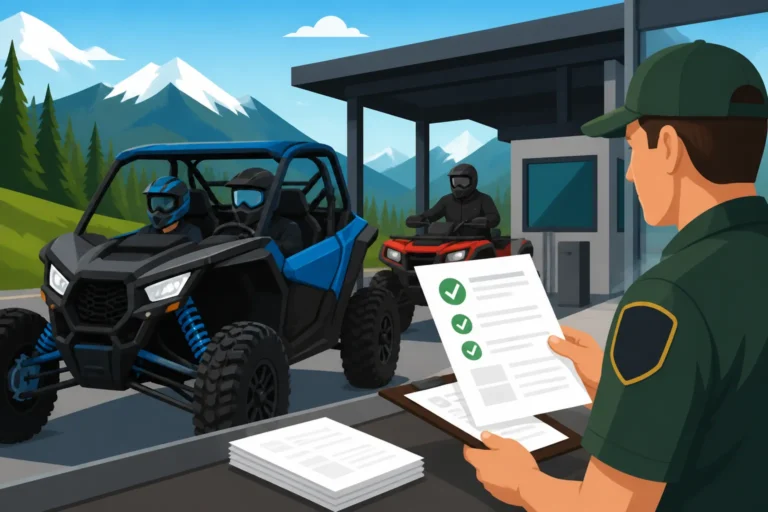
When you walk into an Autoplan broker's office in British Columbia with your ORV registration paperwork, you're not just dealing with a clerk. You're working with a licensed professional who is trained to interpret the requirements of the Off-Road Vehicle Act and ensure that all documentation is in order before a Certificate of Registration is issued. They are the gatekeepers of the system, and understanding their perspective can help you prepare effectively.
Your Autoplan Broker as a Guide
[BC Autoplan Brokers Handle ORV Registration] for all of BC's off-road vehicles. These brokers are your primary point of contact for registration and are crucial in navigating the continuity of ownership challenge. They are not there to intentionally make your life difficult, but rather to ensure compliance with provincial regulations. Think of them as your guide through what can sometimes feel like a bureaucratic maze.
A good broker will take the time to review your documents, ask questions about any gaps, and explain what additional paperwork might be needed. They often have experience with common scenarios and can advise you on the best way to fill in missing links, such as suggesting the use of a statutory declaration. Don't hesitate to ask them questions; they've likely seen it all before.
What Brokers Scrutinize in Your Documentation
Brokers are looking for a clear, legible VIN that matches all documents, consistent names and addresses, correct dates for each transaction, and, most importantly, a complete and logical flow of ownership from one party to the next. If your immediate seller's name isn't clearly linked to a previous document, that's a red flag. They'll also check for proper signatures on all bills of sale and gift letters.
They also verify that the type of document matches the transfer. A bill of sale for a gift transfer, for example, would raise questions. The broker needs to be satisfied that each owner genuinely acquired the machine through legitimate means. This due diligence protects everyone involved and maintains the integrity of the provincial ORV registry.
What Happens When There's a Gap
If a broker identifies a gap in your ownership chain – perhaps a missing bill of sale from a previous owner – they cannot simply proceed with your registration. They will explain what's missing and what options you have to resolve it. Often, this involves trying to track down the missing document, getting a statutory declaration from a previous owner, or, if those aren't possible, you might need to make your own statutory declaration explaining the situation and how you legitimately acquired the machine.
This process can be frustrating, especially if you're eager to get out and ride. Be prepared for the possibility that you might need to leave the broker's office and gather more information or documents. It's a common experience, and patience is key. The more organized you are and the more information you can provide, even if it's in the form of a detailed statutory declaration, the smoother the process will be. [BC Transfer of Ownership Explained] in depth, highlighting these potential pitfalls.
Protecting Yourself: Best Practices for Buyers and Sellers
The continuity of ownership problem isn't just something to deal with when registering an old machine. It's a critical consideration for every transaction, whether you're buying or selling an ORV in British Columbia. Proactive steps can save both parties immense headaches down the road.
For Buyers: Due Diligence is Key
Before you hand over any cash for a used ATV or UTV, especially from a private seller, you need to do your homework. First and foremost, request to see all previous ownership documents. Don't just settle for the seller's bill of sale to them; ask for the complete chain. If they can't produce it, that's a major red flag that indicates potential registration problems for you later. Ask to see the Certificate of Registration if the machine is already registered.
If there are gaps, or if the seller seems evasive, consider walking away. The headache of trying to fill those gaps yourself might outweigh the deal. If you're still interested, insist that the seller obtains the necessary statutory declarations or missing bills of sale before you complete the purchase. Services like LawDepot can assist sellers in creating professional, legally sound bills of sale or gift letters, which can give buyers more confidence in the transaction. It's much easier for the seller, who presumably knows the history better, to gather this paperwork than for you to do it after the sale. [Buying From a Private Seller in BC] is full of other tips for a smooth transaction.
For Sellers: Prepare Your Paperwork
If you're selling your ORV, having a complete and organized set of ownership documents is a huge advantage. It makes your machine more attractive to buyers and streamlines the transaction. Gather all bills of sale, gift letters, and any existing Certificate of Registration before you even list your machine for sale. If you know there's a gap in your own ownership history, proactively prepare a statutory declaration to explain it. This foresight can prevent delays and reassure potential buyers.
Remember that when you sell your machine, you'll need to complete a new bill of sale for the buyer. Make sure it includes all the necessary details: full names and addresses of both parties, the ORV's VIN, make, model, and year, the sale price, and the date of sale. Both parties should sign it, and you should each keep a copy. This ensures the next link in the chain is strong and clear for the new owner.
The Importance of the VIN
The Vehicle Identification Number (VIN) is the unique fingerprint of your ORV. It's absolutely crucial that the VIN on the machine matches the VIN on all your ownership documents. Before buying, physically inspect the VIN on the machine itself (it's usually stamped on the frame) and compare it against all paperwork. Any discrepancies, even a single digit, can cause significant problems at registration. If the VIN is corroded, damaged, or unreadable, you'll face an even tougher challenge.
A clear VIN on all documents ensures that the specific machine being transferred is the one being documented. This prevents confusion and helps prevent fraudulent activity. When you visit your Autoplan broker, they will definitely check the VIN against your documents. If there's any doubt about its authenticity or legibility, they might even require a physical inspection.
The Long-Term Impact of Ignoring Continuity
It might seem tempting to just ignore the registration requirement, especially if you only ride on private land or if you've owned your machine for a long time without issue. However, in British Columbia, the consequences of not addressing the continuity of ownership and subsequently not registering your ORV can be far-reaching and financially significant.
Penalties for Riding an Unregistered Machine
The most immediate and direct impact of ignoring registration requirements is the risk of fines. [BC Tickets for an Unregistered Machine] can be issued if you're caught riding your ORV on Crown land without a valid Certificate of Registration and a visible number plate. These aren't small tickets either; they can quickly add up and turn a fun day of riding into an expensive headache. Law enforcement, including Conservation Officers and RCMP, regularly patrol Crown land and actively check for proper registration.
It's not just about avoiding a ticket. Riding unregistered also means you're operating outside the legal framework established for ORVs in BC. This can have implications for insurance, liability, and even the potential for your machine to be seized in certain circumstances. The province has made it clear that registration is mandatory for use on public lands.
Difficulty Selling Your ORV in the Future
Imagine you've decided to upgrade your quad, or perhaps you're moving out of province. If your ORV isn't properly registered with a clear chain of ownership, you're going to face significant challenges trying to sell it. Most educated buyers in BC will know about the registration requirements and will be hesitant to purchase a machine that they cannot legally register themselves without jumping through hoops.
This can drastically reduce the resale value of your machine, or make it almost impossible to find a buyer at all. You might find yourself having to sell it for parts, or at a heavily discounted price, because you never took the time to sort out the paperwork. The effort you put into establishing continuity of ownership now will pay dividends when it comes time to sell.
Legal Complications and Ownership Disputes
Beyond fines and resale value, ignoring the continuity of ownership can lead to more serious legal complications. If there's ever a dispute over who rightfully owns the machine – perhaps after a divorce, an estate settlement, or even if the machine is stolen – having an incomplete or non-existent ownership chain can severely weaken your claim. Without proper documentation, proving you are the legal owner can become a protracted and expensive legal battle.
The official Certificate of Registration serves as the primary legal document confirming your ownership in BC's system. Without it, your claim is tenuous at best. Taking the time to properly register your machine, even if it means painstakingly piecing together its history, provides you with legal protection and peace of mind. It validates your ownership in the eyes of the law and avoids potential future disputes.
Disclaimer
This article is for general informational purposes only and does not constitute professional advice. Laws, prices and regulations vary by location and change over time. Consult a qualified professional for guidance on your specific situation.