Why BC Does Not Title an ATV
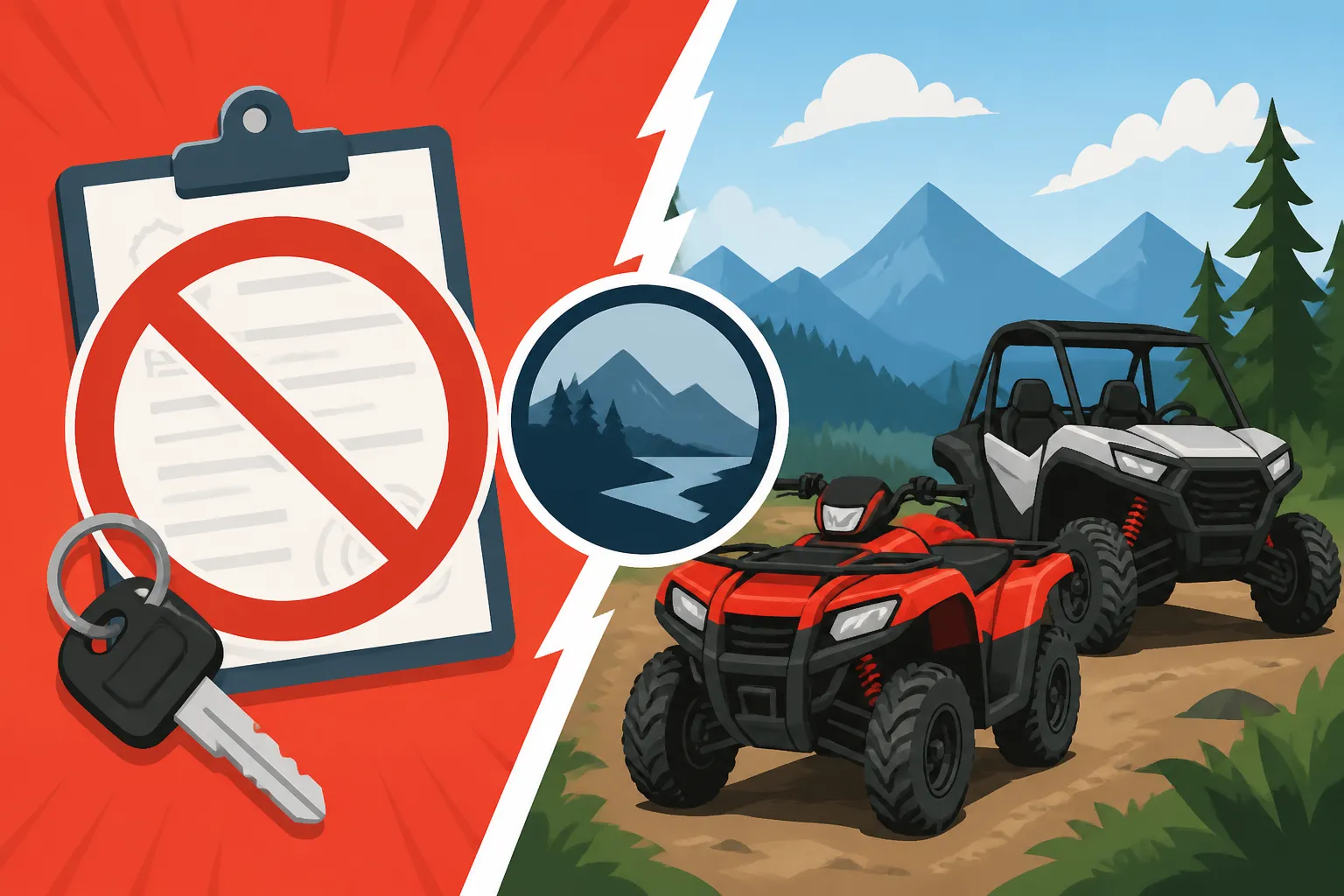
Oh, the age-old question that trips up so many of us new to the BC off-road scene, or even seasoned riders coming from other provinces or states! You buy an ATV, you go to register it, and then you're told there's no "title" like you'd get for a car. It's confusing, often frustrating, and can make you feel like you're missing a crucial piece of paperwork. But don't worry, you're not alone in this confusion, and this guide is here to unravel why British Columbia has a registration system for off-road vehicles (ORVs) instead of a traditional titling system, and what that means for you as a rider and owner.
Understanding the Core Difference: Title vs. Registration in BC
When you're dealing with vehicles, especially off-road machines, the terms "title" and "registration" get tossed around a lot, and it's easy to assume they mean the same thing. But in British Columbia, they are fundamentally different concepts, and understanding this distinction is key to navigating ORV ownership here. Many riders, particularly those who've owned vehicles in other jurisdictions, come to BC expecting a "title" and are understandably perplexed when it's not part of the process for their ATV.
What an ATV Title Signifies in Other Jurisdictions
Let's start by clarifying what a "title" typically represents elsewhere. In many parts of North America – be it other Canadian provinces or most U.S. states – a vehicle title is a legal document that serves as definitive proof of ownership. Think of it as the ultimate deed to your machine. This document typically contains crucial information: who the legal owner is, any lienholders (like a bank that financed the purchase), and a detailed description of the vehicle, including its Vehicle Identification Number (VIN). When you sell a titled vehicle, you sign over the title to the new owner, and that process legally transfers ownership. It's a single, powerful piece of paper that provides a clear and undisputed chain of legal possession.
For ATV owners accustomed to this system, the expectation is that their quad or side-by-side will also come with such a title. This can be especially true if you're importing a machine from a titling jurisdiction. The absence of this familiar document in BC can feel unsettling, as if your ownership isn't fully secure or recognized. It's a common point of frustration, making people wonder if they've completed the necessary steps or if their purchase is even legitimate without that foundational piece of paper. The simplicity and clarity of a title transfer, where you literally sign off your rights, is something many riders are used to and miss in the BC system.
How BC's Registration System Works Instead
British Columbia operates under the Off-Road Vehicle Act, which came into effect in November 2015. Rather than implementing a titling system, BC chose a registration model. This means that instead of receiving a "title" as proof of absolute ownership, you register your ORV with ICBC, typically through an Autoplan broker. [BC Autoplan Brokers Handle ORV Registration] The document you receive is called a Certificate of Registration. This certificate is not a deed to your machine in the same way a title is; rather, it's an official record linking you, as the registered owner, to a specific off-road vehicle in the provincial database.
The primary purpose of this registration is to identify the machine and its operator for the sake of public safety, environmental protection, and law enforcement on Crown land. [BC Crown Land Triggers the Registration Rule] It ensures that if your ORV is found abandoned, involved in an accident, or used illegally, there's a clear way to track it back to an individual. It also serves as a permit for legal operation on most public lands, including resource roads and designated trails. Unlike a title, which is fundamentally about who owns the property, the Certificate of Registration is more about who is responsible for operating the machine in public spaces and ensuring it adheres to provincial regulations. It's a distinction that can feel subtle but has significant implications for how you prove and transfer ownership here. [Why Your Quad Gets a Certificate and Not a Title]
The Historical Context: Why BC Chose Registration Over Titling
Understanding why BC opted for a registration system over a titling system helps to clarify the current landscape. It wasn't an arbitrary decision but rather a pragmatic approach to a long-standing challenge of managing off-road vehicle use in a province with vast wilderness and diverse user groups. For decades, the system, or lack thereof, created a lot of headaches for everyone involved.
The Landscape Before the ORV Act
Before the Off-Road Vehicle Act became mandatory in November 2015, the world of ATVs and UTVs in British Columbia was largely unregulated from a provincial registration standpoint. Riders could purchase machines, often through private sales or from dealers, and there was no centralized provincial database tracking ownership or operational status. Imagine the wild west, but with quads. This lack of oversight led to numerous challenges.
For law enforcement, it was incredibly difficult to trace stolen machines, as there was no registry to cross-reference. If an ORV was involved in an accident on Crown land, identifying the responsible party was often a protracted and challenging process. From an environmental perspective, tracking the impact of ORV use, or enforcing rules in sensitive areas, was nearly impossible without knowing who was operating which machine. Moreover, with no formal provincial transfer system, ownership was solely based on private bills of sale, which could be easily lost, falsified, or incomplete, leading to disputes and further complications down the road. This informal system worked for some, but it created significant gaps in accountability and safety that the province eventually had to address.
The Introduction of the Off-Road Vehicle Act in 2015
The turning point came with the introduction of the Off-Road Vehicle Act. [BC Registration Became Mandatory in 2015] This legislation was a direct response to growing concerns over public safety, environmental damage, and the need for better management of off-road recreation across the province's extensive Crown lands. The government recognized the need for a system that could identify ORV operators, track machines, and provide a framework for enforcement.
Why registration instead of titling? Several factors likely played into this decision. Firstly, establishing an entirely new titling bureaucracy for ORVs would have been a massive undertaking, potentially delaying implementation. BC already had a robust motor vehicle registration system through ICBC and its network of Autoplan brokers. By integrating ORV registration into this existing infrastructure, the province could leverage established processes and a readily available network of service providers. This made the implementation faster and more cost-effective. Secondly, the primary goal was to regulate use on Crown land and identify operators, which a registration system effectively achieves. While a title system is geared towards absolute proof of ownership and encumbrances, a registration system focuses on identification and permission to operate. This streamlined approach allowed BC to quickly address the most pressing issues without reinventing the wheel entirely for a new category of vehicles.
What Documents Prove Ownership in BC Without a Title
Since British Columbia doesn't issue a "title" for your ATV or UTV, you might be wondering, "How on earth do I prove I actually own this thing?" This is a crucial question, and it highlights why understanding the BC system is so important. While the Certificate of Registration links you to the machine, it's not the ultimate proof of legal ownership in the way a title is in other places. Instead, BC relies on a combination of documents, with the bill of sale being the kingpin.
The Indispensable Bill of Sale
In British Columbia, the bill of sale is the bedrock of proving ownership for an ORV. This document is your legal evidence that you purchased the machine, and it explicitly transfers property rights from the seller to you. It's not just a casual receipt; a proper bill of sale should contain specific details to make it legally sound and useful for registration. This includes the full names and addresses of both the buyer and the seller, a detailed description of the off-road vehicle (make, model, year, and crucially, the Vehicle Identification Number or VIN), the purchase price, and the date of the sale. Both the buyer and seller should sign and date it.
It's absolutely vital to keep every bill of sale in the machine's history. When you go to register or transfer an ORV, especially an older one, ICBC and Autoplan brokers will want to see a clear chain of ownership documented by bills of sale from the original purchase right up to your acquisition. [BC Bills of Sale for Every Prior Owner] This can be a real headache for machines that have changed hands many times over the years through informal sales. A well-crafted bill of sale protects both the buyer and the seller and is essential for avoiding future headaches during registration or sale. If you're buying privately, or even selling, considering a template from a service like LawDepot can ensure all the necessary legal clauses and details are included, giving both parties peace of mind and meeting the provincial requirements.
Statutory Declarations and Gift Letters
What happens if you don't have a pristine chain of bills of sale? This is where many riders hit a wall, especially with older machines bought informally decades ago. BC recognizes that life isn't always neat, and sometimes original paperwork goes missing or was never properly created. In such cases, a statutory declaration can be your saving grace. [BC Statutory Declaration for an ORV]
A statutory declaration is a sworn statement, made under oath before a notary public or a commissioner for taking affidavits, affirming that you are the rightful owner of the ORV and explaining the circumstances of its acquisition, particularly why a bill of sale is missing. This document is a serious legal commitment, and making a false declaration can carry significant penalties. It's often required when you've inherited a machine, bought one with a handwritten note that isn't a proper bill of sale, or simply have a gap in the ownership history. Similarly, if an ORV is being gifted between family members, a gift letter that clearly states the transfer of ownership from one party to another, without monetary exchange, is often needed. [BC Gift Letters Between Family] This also needs to contain all the pertinent details of the machine and the parties involved. Both statutory declarations and gift letters are crucial tools to help bridge those gaps in documentation and are accepted by Autoplan brokers as part of the ownership transfer process. Again, for complex situations or to ensure your declaration or gift letter is legally robust, resources like LawDepot can offer valuable templates and guidance.
The Role of the Certificate of Registration
So, if there's no title, and the bill of sale is your proof of ownership, what exactly is the Certificate of Registration? This document, which you receive after successfully registering your off-road vehicle, holds a very specific and important place within BC's ORV framework. It's not just another piece of paper; it serves a distinct purpose for compliance and enforcement.
What the Certificate Really Is
The Certificate of Registration, sometimes simply called the "Certificate," is the official document issued by ICBC that confirms your ORV has been registered under the Off-Road Vehicle Act. [BC's Certificate of Registration Explained] Think of it as a license to operate your specific machine on designated Crown land and resource roads throughout British Columbia. It primarily serves as an identification document for the machine and links it to you, the registered owner, in the provincial database.
It contains key information about your ORV, such as the make, model, year, VIN, and the specific ORV plate number assigned to it. It also lists the name and address of the current registered owner. However, it's crucial to reiterate that this certificate does not, in itself, convey legal title or absolute ownership in the way a car title would in other jurisdictions. It acknowledges that you are the person legally responsible for that machine and its operation within the province's regulatory framework. While an essential document for operational purposes, it works in conjunction with your bill of sale (or statutory declaration) to establish your overall standing as the owner and operator. Without the registration, even if you own the machine, you cannot legally operate it on most public lands.
Why You Must Carry It While Riding
This is not a suggestion; it's a legal requirement. Under the Off-Road Vehicle Act, if you are operating your registered ORV on Crown land, which includes most trails, forest service roads, and public recreation areas, you must carry your Certificate of Registration with you. [BC Riders Must Carry the Certificate] This doesn't mean it has to be physically attached to you, but it needs to be readily accessible in or on the machine itself, or on your person, should an enforcement officer ask to see it.
The reason for this rule is straightforward: it allows law enforcement, conservation officers, or other authorized personnel to quickly verify that the machine is registered and that you are the person legally entitled to operate it. This helps combat theft, ensures compliance with other ORV regulations, and aids in investigations should an incident occur. Failure to produce your Certificate of Registration upon request can result in fines and potential delays, as the officer would then need to conduct a more extensive check to verify the machine's status. Along with your Certificate, it's also a good practice, and often a requirement, to carry valid photo identification so that your identity can be confirmed against the registration document. [BC Riders Must Carry Photo ID] This simple act of carrying your documents ensures you're prepared for any interaction and can continue enjoying your ride without unnecessary interruptions.
Transfer of Ownership in a Non-Titling Jurisdiction
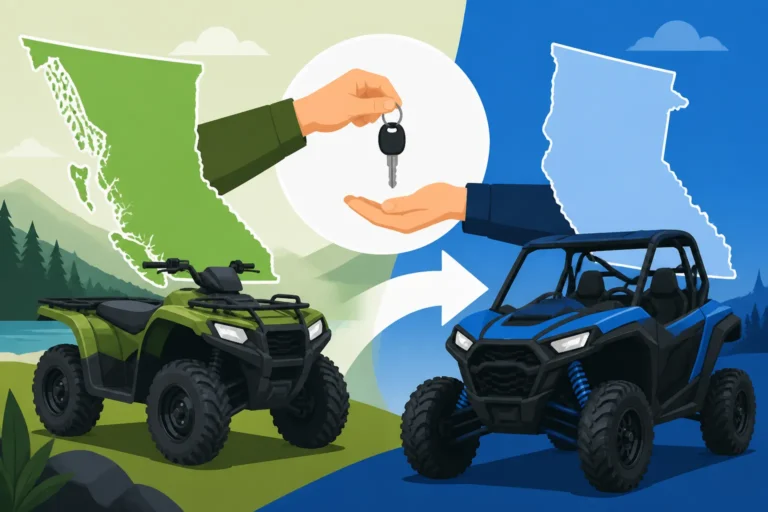
Since there's no "title" to simply sign over, the process of buying or selling an ORV in British Columbia, and subsequently transferring its ownership, can feel a bit different than what some might be used to. It's not complicated once you understand it, but it relies heavily on specific paperwork and going through the correct channels. The key is to understand that the transfer of the registered ownership is separate from the transfer of the legal ownership through the bill of sale.
The Process with an Autoplan Broker
The core of transferring registered ownership of an ORV in BC happens at an Autoplan broker's office. These are the same offices where you would register a car or truck, and they are equipped to handle ORV transactions. [BC Autoplan Brokers Handle ORV Registration] When you buy an ORV, you, as the new owner, are responsible for visiting a broker to register the machine in your name. You'll need to bring several key items:
- Your valid photo identification: To prove who you are.
- The original bill of sale: This is the paramount document proving you purchased the machine from the previous owner. As discussed, a complete and detailed bill of sale is essential.
- The machine itself (sometimes): Brokers will often need to verify the VIN on the machine to ensure it matches the paperwork and to catch any potential discrepancies or errors. It's always best to bring the machine or be prepared to provide clear photos of the VIN plate.
- Payment for fees and taxes: There's a provincial sales tax (PST) that applies to the purchase price of the ORV, similar to other vehicle sales. [BC PST on an ATV Purchase] There's also a nominal fee for the transfer of ownership itself. [BC Charges $28 to Transfer Ownership]
The broker will process your paperwork, update the provincial database, and issue you a new Certificate of Registration and a new ORV plate and decal if one is needed. [BC ORV Number Plates and Decals] This entire process ensures that the official record of the machine's registered owner is accurate and up to date. [BC Transfer of Ownership Steps]
Addressing the "Continuity of Ownership" Challenge
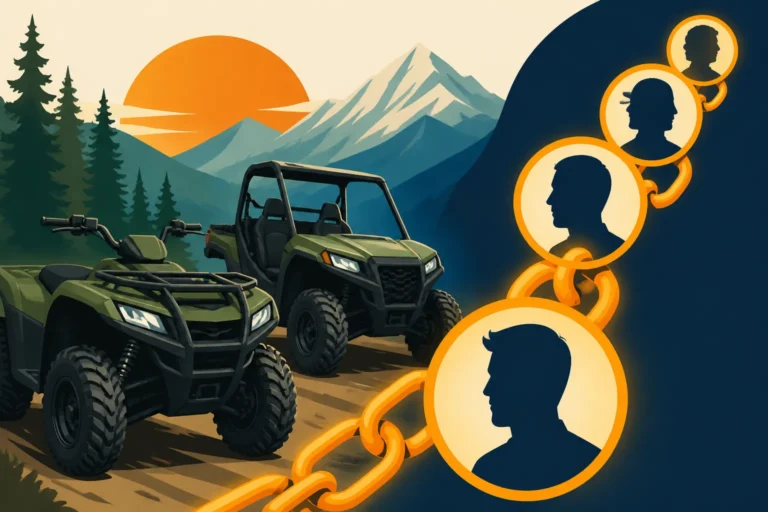
One of the biggest hurdles many ORV owners face in BC's non-titling system is proving "continuity of ownership." This issue frequently arises with older machines that have changed hands many times over the decades, often through informal cash sales without proper bills of sale. Because there's no central title to trace back through time, Autoplan brokers and ICBC rely on a chain of bills of sale from each prior owner to establish legitimate ownership. [BC Ownership Chains Going Back Decades]
If there's a "gap" in this chain – meaning a previous owner sold the machine but didn't provide a bill of sale, or that bill of sale has been lost – the process becomes significantly more complicated. You can't just register an ORV without establishing this ownership history. This is where statutory declarations become invaluable. As mentioned, you might need to swear an affidavit explaining the circumstances of the missing paperwork and affirming your rightful ownership. This can be a time-consuming and sometimes costly process, as it involves finding a notary public or commissioner of oaths and preparing a detailed statement. It's a testament to why robust documentation from day one is so important in BC. The absence of a clear title system means that the onus is heavily on the individual owner to maintain a complete paper trail. This can be a source of considerable frustration, especially when dealing with a machine that has a long and undocumented past. It often requires diligent detective work to track down previous owners or careful preparation of a statutory declaration, potentially with templates from a service like LawDepot, to satisfy the requirements.
Implications for Riders and Buyers in BC
The fact that British Columbia uses a registration system instead of a titling system has practical implications for every ORV owner and prospective buyer in the province. It shapes how you approach purchasing, selling, and even protecting your investment. Being aware of these differences can save you a lot of grief down the line and ensure you're always on the right side of the law.
Buying and Selling an ORV in BC
For buyers, the mantra in BC should always be: "Document, document, document." When looking at a private sale, always insist on a comprehensive and clear bill of sale from the seller. This document should explicitly state the transfer of ownership, include all the machine's details (make, model, year, VIN), the sale price, and the full contact information of both parties, along with signatures and dates. Do not settle for a vague receipt or a handshake agreement. Verify the VIN on the machine matches the paperwork. If the seller doesn't have the previous bill of sale, or there are gaps in the ownership history, proceed with extreme caution and be prepared to go through the statutory declaration process yourself. [BC Machines With No Paperwork] It's also wise to ask for the current Certificate of Registration to confirm the seller is the registered owner.
Sellers, conversely, have a responsibility to provide a clear bill of sale and ensure the buyer understands the steps needed for registration. While the legal ownership transfers with the sale, the registered ownership doesn't change until the buyer visits an Autoplan broker. Make sure you keep a copy of the bill of sale for your own records, just in case any future questions arise about the machine's history. It's worth remembering that you're technically still the registered owner until the new owner completes their part of the process, which could have implications if the machine is involved in an incident before registration is updated.
Legal Standing and Asset Protection
In a non-titling jurisdiction like BC, your legal standing as an ORV owner relies heavily on your bill of sale and the provincial registration records. If there's ever a dispute over ownership, a court would primarily look at the chain of bills of sale and the current Certificate of Registration. The absence of a single, definitive "title" means your personal documentation becomes even more critical for proving your claim.
This also has implications for asset protection and financing. While many lenders will still provide loans for ORVs, they often secure their interest through a lien registered against the machine, which would be noted in the provincial registration database (though not on a physical "title"). If you're using your ORV as collateral, ensure you understand how the lender records their interest. Beyond that, maintaining comprehensive records of your purchase, any modifications, and all registration documents is vital for protecting your investment. Keeping digital and physical copies of everything – your bill of sale, registration certificate, and any statutory declarations – is a smart move. For those moments where an informal agreement might be made (e.g., lending a machine to a friend, or co-ownership arrangements), having properly drafted documents, perhaps using templates from LawDepot, can provide crucial legal clarity and protection, outlining terms of use or ownership shares, especially since there isn't one overarching title to dictate such matters. Ultimately, while BC's system is different, it's not inherently worse; it simply requires a more proactive approach to personal record-keeping and understanding the specific roles of various documents.
| Feature | Traditional Vehicle Title (Other Jurisdictions) | BC Off-Road Vehicle Registration (ORV Act) |
|---|---|---|
| Primary Purpose | Proof of absolute legal ownership | Identification and permit for operation |
| Document Issued | Vehicle Title (physical paper) | Certificate of Registration (physical paper) |
| Lienholder Info | Clearly noted on the title | Recorded in provincial database |
| Transfer Process | Signing over the title | New owner visits Autoplan broker with bill of sale |
| Proof of Ownership | The title itself | Bill of sale + Certificate of Registration |
| Chain of Ownership | Easily traceable via sequential titles | Relies on a complete chain of bills of sale |
| Mandatory Since | Generally always existed | November 2015 for ORVs |
| What You Carry | Not usually carried in vehicle (kept safe) | Certificate of Registration (must be carried) |
Disclaimer
This article is for general informational purposes only and does not constitute professional advice. Laws, prices and regulations vary by location and change over time. Consult a qualified professional for guidance on your specific situation.