BC Registration for an Imported Machine
Bringing an ATV or UTV into British Columbia from another province or country can feel like navigating a bureaucratic maze, especially when you're trying to figure out the exact registration steps for a machine that’s never been part of BC’s system before. This comprehensive guide will walk you through the specifics of registering an imported off-road vehicle in BC, helping you understand the paperwork, processes, and potential snags so you can get your machine registered and ready to ride without unnecessary hassle.
The Initial Hurdles of Bringing Your ORV to BC
It’s easy to assume that if you owned your off-road vehicle (ORV) elsewhere, bringing it into British Columbia would be a simple matter of driving it across the border or shipping it over. Unfortunately, the process often involves a bit more red tape than many riders anticipate. Understanding the initial hurdles, particularly how BC defines an "imported" ORV and why registration is so critical, is your first step towards a smooth transition.
Understanding the "Imported" Definition for ORVs
When we talk about an "imported" ORV in British Columbia, it's not just about machines coming from outside Canada. While bringing an ATV or side-by-side from, say, Washington State or Montana definitely counts, the term also broadly applies to vehicles arriving from other Canadian provinces. Each jurisdiction has its own way of tracking ownership, and BC's system, while streamlined in many ways, has specific requirements for integrating vehicles from different provincial or national frameworks. Essentially, if your ORV wasn't initially registered and documented within BC's system, it's considered "imported" in terms of the registration process you'll need to follow. This means you’ll be starting fresh with BC's unique set of rules, regardless of its previous home.
Why BC Registration Became Mandatory
Before November 1, 2015, off-road vehicle registration in British Columbia wasn't mandatory unless you were using your machine on a public highway (which, let's be honest, few ORVs are legally designed to do). This meant countless ATVs, UTVs, dirt bikes, and snowmobiles roamed Crown land without any central record. The change came with the [What the Off-Road Vehicle Act Covers in BC] which introduced mandatory registration for almost all ORVs operating off private land. The primary goal was to enhance safety, improve tracking for law enforcement (especially in cases of theft or illegal operation), and better manage trails and resources. This means that any machine, no matter its origin, needs to be integrated into this provincial system if you plan to ride it anywhere but on your own private property. If you're bringing a machine into BC today, you're directly entering this post-2015 world where a Certificate of Registration is a non-negotiable item for Crown land use.
Different Origin Stories: US Versus Other Provinces
The type of "import" you're undertaking will slightly alter the hoops you need to jump through. Bringing an ORV from another Canadian province, like Alberta or Ontario, is generally less complex than importing one from the United States. This is primarily due to different customs and import duty requirements, as well as varying provincial standards for vehicle documentation. For instance, some Canadian provinces have very basic registration systems, or none at all for certain classes of ORVs, which can create gaps in the ownership chain that you'll need to address. Conversely, US imports involve federal customs procedures before you even get to BC's provincial registration office. It's crucial to identify your ORV's true origin, as this will dictate the specific documentation and checks you'll need to undertake. Whether it's a quad from Calgary or a side-by-side from Seattle, knowing its previous jurisdiction is key to anticipating the required steps.
Essential Paperwork for a Smooth Import
The number one cause of frustration when registering an imported ORV in BC is often incomplete or incorrect paperwork. Brokers at ICBC Autoplan offices are very particular about having a clear, unbroken chain of ownership, and any gaps can lead to delays or even outright refusal until the documentation is sorted. Getting your ducks in a row before you even step foot in the broker's office is paramount.
The Absolute Must-Have Documents from Any Origin
Regardless of where your ORV is coming from, there are core documents that every BC Autoplan broker will need to see. At the very minimum, you'll need a legitimate bill of sale or proof of purchase from the previous owner, identifying both parties, the machine's make, model, year, and crucially, its Vehicle Identification Number (VIN). This bill of sale needs to be clear, legible, and ideally, signed by both the buyer and seller. For machines coming from outside Canada, you’ll also need your import documentation from the Canada Border Services Agency (CBSA) showing that duties and taxes have been paid and the vehicle has been cleared for entry. Without this initial proof of ownership and a clear path into Canada if applicable, you simply won't be able to proceed with registration. Think of this as the foundation upon which your entire BC registration will be built. You'll also need [BC Riders Must Carry Photo ID] when dealing with a broker and when riding.
Dealing with Missing or Incomplete Ownership Records
This is where many imported ORV registrations hit a snag. What if the previous owner in Alberta only gave you a handwritten receipt, or the US seller didn't provide a formal bill of sale? Or worse, what if you bought an older machine where the original owner is long gone, and previous sales were never properly documented? BC's system, designed for accountability, requires a complete "chain of ownership." This means tracing the machine's history from its original purchase, or at least from the point it entered the province, through every subsequent owner until it reached you. If there's a missing link in this chain – perhaps a seller didn't provide a bill of sale, or a previous owner lost theirs – you might need to fill that gap with a statutory declaration. This is a sworn legal document, often created using resources like LawDepot, that attests to your ownership and how you acquired the machine. It’s a formal statement made under oath, legally binding, and can help bridge those documentary gaps. [BC Ownership Chains Going Back Decades] often have this problem.
Preparing Your Bill of Sale and Declarations
For every transaction in your ORV's history, the broker will want a corresponding bill of sale. If you're the current owner, you'll need a detailed bill of sale from your immediate seller. If that seller couldn't provide documentation for their purchase, or if you inherited the machine, or if you simply can't locate a previous owner, a statutory declaration becomes your best friend. These declarations legally state how you came into possession of the ORV and affirm that you are the rightful owner. You can find templates for these on legal document websites like LawDepot, which allow you to customize them to your specific situation. They typically require you to declare the facts before a notary public or commissioner for taking affidavits. This step might feel like extra work, but it's essential for providing the necessary legal assurances to the BC registration authority, especially for older or privately acquired machines. Each [BC Statutory Declarations Cost $15] if signed at a Service BC location. Remember, if you use a service like LawDepot to generate your form, you'll still need to get it properly witnessed and signed.
Navigating Customs and Border Formalities
For those bringing an ORV across an international border into BC, customs clearance is a mandatory precursor to provincial registration. This step ensures that your machine legally enters Canada and that all applicable duties and taxes are settled. Even for inter-provincial moves, understanding the nuances can prevent headaches.
Specifics for US Imports: CBSA and RIV
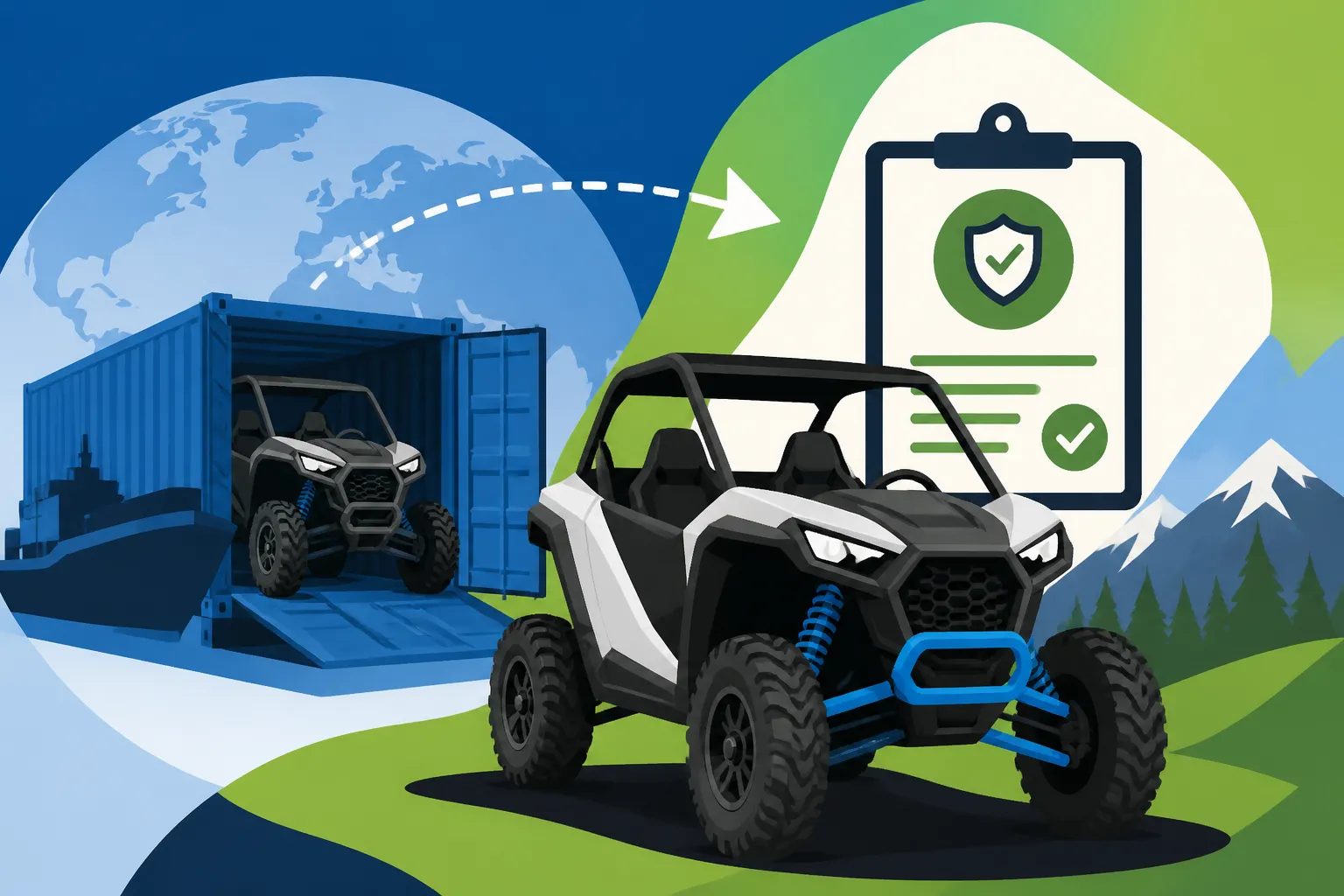
If your ORV is coming from the United States, you'll be dealing with the Canada Border Services Agency (CBSA) and potentially the Registrar of Imported Vehicles (RIV) program. While many standard road vehicles must go through RIV inspections to ensure they meet Canadian safety and emissions standards, off-road vehicles like ATVs and UTVs are generally exempt from the RIV program. This is a common point of confusion for many people importing vehicles. However, you still need to declare your ORV to CBSA at the border, pay any applicable duties, and Goods and Services Tax (GST), and potentially Provincial Sales Tax (PST) upon importation or later when registering in BC. Make sure to have your bill of sale, title (if applicable in the US state of origin), and any previous registration documents ready for the border agent. The CBSA will provide you with import documentation (often a Form B3 or similar) that proves your machine legally entered Canada. This document is absolutely critical for your BC registration process later on.
Crossing from Another Canadian Province
Bringing an ORV from another Canadian province, such as Alberta or Saskatchewan, avoids the federal customs and RIV complexities. However, you're still "importing" the machine in the sense that it needs to be registered into BC's system. The primary challenge here often lies in the varying documentation standards across provinces. While BC issues a [BC's Certificate of Registration Explained] and doesn't "title" ATVs in the traditional sense, other provinces might have different forms of ownership proof. Alberta, for example, primarily relies on a bill of sale as proof of ownership for ORVs, with no central registry or title document. This means you need a very clear, detailed bill of sale from the previous owner. If you're transferring a machine from a province with minimal ORV registration, be prepared to present a robust [BC Bills of Sale for Every Prior Owner] and possibly fill in gaps with your own statutory declaration, similar to what you might use for an older BC machine with missing papers. [BC Registration for a Machine From Alberta] is a common scenario.
What Happens at the Border: Tips and Traps
Whether crossing from the US or another province, preparation is key. For US imports, ensure all your documents are neatly organized: proof of ownership (title, bill of sale), any loan release documents if applicable, and your identity papers. Be honest and declare your ORV. Failing to declare it can lead to severe penalties, including seizure of the vehicle. For inter-provincial moves, while there's no physical "border" check, be ready with your ownership documents when you head to the Autoplan broker. A common trap for US imports is assuming your ORV needs RIV inspection; double-check current regulations, but typically, ORVs are exempt. Another trap is underestimating the importance of a clear VIN; a damaged or unreadable VIN can cause significant delays. Always make sure your VIN is accessible and legible. Have an organized [BC Registration Paperwork Checklist] ready, so you don't miss anything crucial.
The BC Registration Process for Imported Machines
Once your imported ORV has cleared any necessary customs or provincial transfer hurdles, you're ready to tackle the actual registration with ICBC. This isn't like registering a car, and understanding the specific roles and steps involved will make the process much smoother.
Finding the Right Autoplan Broker
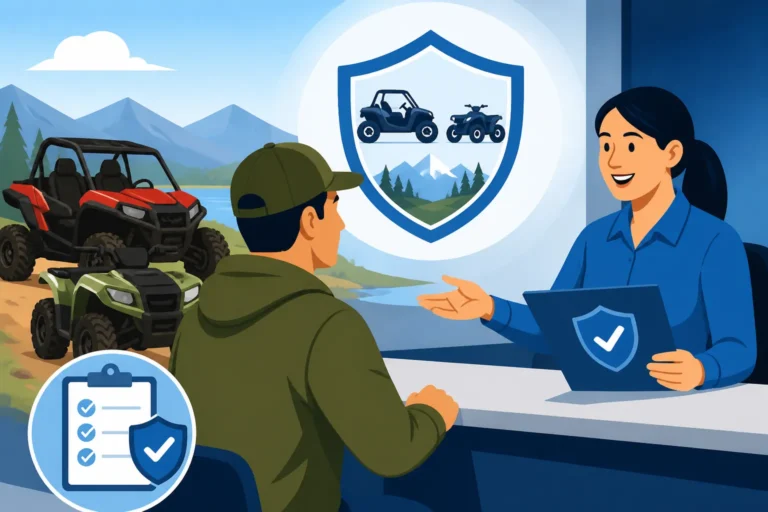
Unlike car registration, which you can handle at any ICBC Autoplan office, ORV registration is a bit more specialized. While technically any Autoplan broker can assist, some offices or individual brokers have more experience with the unique requirements of off-road vehicles, especially those with complex ownership histories like imports. It's often worth calling ahead to a few local offices to ask if they have experience with BC Registration for an Imported Machine or [BC Machines With No Paperwork]. This can save you a lot of time and frustration. A broker who understands the nuances of statutory declarations, continuity of ownership, and dealing with machines from other jurisdictions will be invaluable. Remember, these brokers are your gateway to getting your ORV on BC's system, so finding a knowledgeable one is a huge advantage.
Step-by-Step: What to Expect at the Broker's Office
When you visit the Autoplan broker, here’s a typical rundown of what will happen:
- Present Your Documents: Hand over all your ownership documents – bills of sale, statutory declarations (if needed, perhaps created with help from LawDepot), US import papers (if applicable), and your photo ID.
- VIN Verification: The broker will need to verify the ORV's VIN. Sometimes they'll ask you to provide a clear photo of the VIN on the machine; other times, they might require you to bring the machine to the office for a physical inspection, especially if there are concerns about its origin or the VIN's legibility. Make sure your VIN is clean and easily readable. [BC Registration When the VIN Is Gone] is a problem you definitely want to avoid.
- Ownership Chain Review: The broker will carefully review your submitted documents to establish a clear, unbroken chain of ownership from the previous owner (or further back if gaps exist) to you. This is where those declarations come into play for older machines or those from provinces with less stringent documentation.
- Pay Fees and Taxes: You'll pay the one-time registration fee (which is remarkably affordable, especially since [BC Registration Lasts as Long as You Own It] and [BC Has No Annual Renewal Sticker]) and any applicable [BC PST on an ATV Purchase]. For imports, the PST will usually be calculated on the declared value of the machine.
- Receive Your Certificate and Plate: Once everything checks out, the broker will issue you a BC Off-Road Vehicle Certificate of Registration and your new ORV license plate and decal. You are now officially registered!
Understanding Your New Certificate of Registration
After completing the registration, you'll walk out with your new ORV license plate, a decal, and most importantly, your BC Off-Road Vehicle Certificate of Registration. This certificate is crucial; it's the legal proof that your machine is registered in British Columbia and identifies you as the registered owner. Unlike a vehicle title for cars, this certificate serves as your primary ownership document for ORVs in BC. It’s absolutely essential that you [BC Riders Must Carry the Certificate] along with your photo ID whenever you are operating your ORV on Crown land or a forest service road. Think of it like your vehicle's passport. Losing it can create minor headaches, so keep it safe! Also, ensure you know how to properly attach your [BC ORV Number Plates and Decals] so it's visible and legal.
Common Challenges and Troubleshooting
Even with careful preparation, importing and registering an ORV can present unique challenges. Knowing what these are and how to address them can save you a great deal of stress and time.
Proving Continuity of Ownership for Older Machines
One of the biggest hurdles, especially for imported machines from jurisdictions with less rigorous registration systems, is proving a continuous chain of ownership. Imagine you bought a vintage quad from a private seller in Idaho, who themselves bought it at an auction years ago and only had a handwritten note. BC's system wants to see documentation for every transfer. If previous owners are untraceable or documentation is sparse, you'll likely need to submit a statutory declaration, detailing the history as best you know it and affirming your legal ownership. This declaration, which can be drafted using templates from services like LawDepot, becomes your primary proof. It's a formal statement, signed before a commissioner for taking affidavits, that acts as a legal bridge over missing paperwork. The broker needs to be satisfied that you are indeed the rightful owner and that the machine isn't stolen or subject to other claims. [Why Every Past Sale Has to Be Documented] is a deep dive into this topic.
What if Your VIN is Damaged or Missing?
The Vehicle Identification Number (VIN) is the unique identifier for your ORV. It's like its DNA. A clear, legible VIN is non-negotiable for registration. If your imported machine has a VIN that is damaged, unreadable, or missing entirely (which can happen on very old or heavily modified machines), you're in for a significant challenge. The broker might refuse registration until the VIN issue is resolved. In some cases, you might need to seek a VIN verification from a qualified mechanic or even apply for a new VIN through ICBC, which is a lengthy and complex process involving inspections to ensure the machine isn't stolen and meets certain standards. It’s crucial to inspect the VIN before you even purchase an imported machine, ensuring it’s present and readable. Without a verifiable VIN, proving legal ownership and registering your ORV becomes extremely difficult. [Serial Numbers and Where They Hide] can help you locate it.
Dealing with PST on Imported Purchases
When you register your imported ORV in BC, you'll be subject to Provincial Sales Tax (PST) on the purchase price, unless you qualify for an exemption (e.g., as a gift between family members, for which a [BC Gift Letters Between Family] might be required). This is the case whether you imported it from the US or another Canadian province. For US imports, you might have already paid GST at the border; the PST will then be assessed on the value of the ORV, often calculated based on the sale price you declare. Be aware that if the declared sale price seems unusually low, ICBC may use an independent appraisal to determine a fair market value for PST calculation. Keep all receipts and documentation related to the purchase price to justify the value. It’s an unavoidable cost, but knowing it's coming helps you budget accordingly. Remember, the registration fee itself is a modest, one-time payment, but the PST can be a more substantial amount depending on the value of your machine. [BC PST on a Private ATV Sale] explains this in detail.
Table: Key Documents for Imported ORV Registration in BC
To help you keep track, here's a summary of the key documents you'll typically need when registering an imported off-road vehicle in British Columbia, broken down by common origin:
| Document Type | From US/International | From Another Canadian Province | Older Machine (Any Origin) |
|---|---|---|---|
| Proof of Purchase/Bill of Sale | Required (detailed) | Required (detailed) | Required (if available) |
| Original Title (if applicable) | Required (if issued) | Not typically issued for ORVs | Not typically issued for ORVs |
| Customs Import Document (B3) | Required (from CBSA) | Not applicable | Not applicable |
| Statutory Declaration | Often needed for missing papers | Often needed for missing papers | Highly likely needed (LawDepot can help) |
| Proof of Identity (Photo ID) | Required | Required | Required |
| Proof of VIN (photo/inspection) | Required | Required | Required |
| Previous Registration (if any) | Helpful, but not always primary | Helpful, but not always primary | Helpful, but not always primary |
| Gift Letter (if applicable) | Only for family transfers | Only for family transfers | Only for family transfers |
Disclaimer
This article is for general informational purposes only and does not constitute professional advice. Laws, prices and regulations vary by location and change over time. Consult a qualified professional for guidance on your specific situation.